A clear starting point
You get a calm, plain-English explanation of the decisions that come before a first investment: bills, emergency cash, high-interest debt, sustainable first amounts, risk, volatility and why time horizon matters.
Financial literacy guide
A plain-English 2026 Australian guide for younger first-time investors who want the basics explained before they choose an app, platform, ETF or strategy.
Last reviewed: 17 May 2026. General information only, not financial advice.
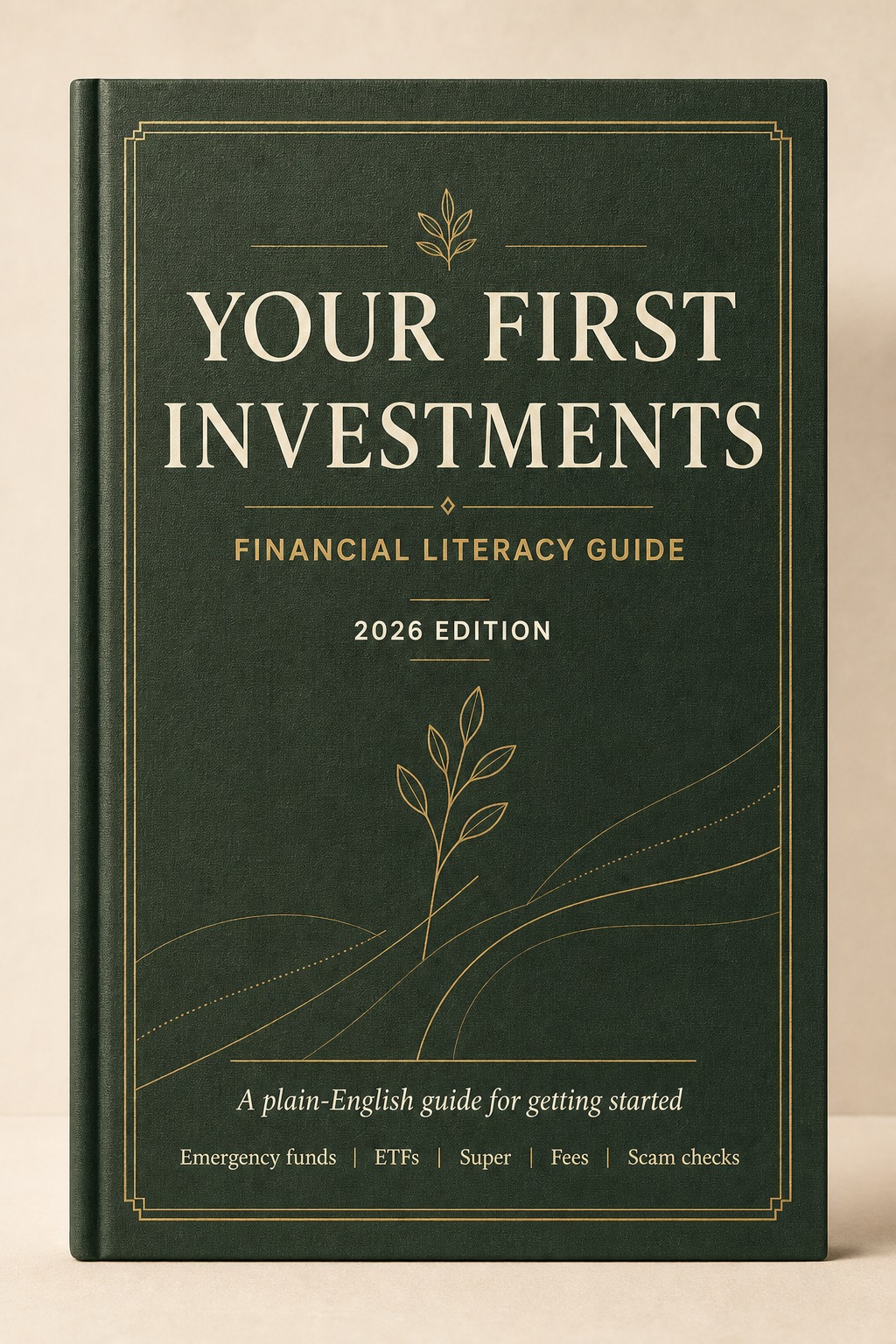
What this gives you
The guide is written for people who have heard they should invest, but want the basics explained in a useful order first: what to sort out before investing, what the main choices mean and what questions to ask before money leaves the account.
You get a calm, plain-English explanation of the decisions that come before a first investment: bills, emergency cash, high-interest debt, sustainable first amounts, risk, volatility and why time horizon matters.
The guide walks through shares, ETFs, index funds, compound growth, micro-investing apps, direct platforms, CHESS-sponsored and custodial ownership, platform fees and why super is already an investment portfolio.
You also get practical checks for fees, ownership, diversification, social media finance claims, crypto hype and scam warning signs. It does not recommend a specific platform, product or portfolio; it helps you understand the terms before making decisions or seeking personal advice.
Inside the guide
It is designed to be read front to back first, then used as a reference when comparing platforms or checking whether an investment decision is being rushed.
Emergency buffers, high-interest debt, basic cashflow and the difference between a sustainable first amount and an impressive one.
Shares, ETFs, managed funds, returns, volatility, inflation, time horizon and compound growth in plain language.
Micro-investing, direct investing, platform fees, CHESS-sponsored and custodial ownership, super options, contribution basics and employer checks.
Automation, annual reviews, panic selling, social media finance content, crypto caution and investment scam checks.
Product Q&A
Quick answers before you open the Gumroad checkout page.
Gumroad checkout
Your First Investments is built to make the early questions less vague: what to sort out first, what the common terms mean, where fees matter and what red flags to avoid.
AUD $19